
The quest for the perfect name, whether for a fictional character, a business, a brand, or even a pet, can often be a surprisingly time-consuming and frustrating endeavor. It’s a task that requires creativity, context, and often, a touch of luck. Enter the random name generator tool, a digital tool designed to alleviate this burden by producing a continuous stream of unique and usable names based on specific parameters. These tools have become indispensable across various industries, from creative writing to gaming and data testing, proving that sometimes, the best name is one you didn’t think of yourself. The convenience and sheer volume of suggestions offered by a robust random name generator are transforming how we approach the naming process, making it faster and far less restrictive than traditional brainstorming.
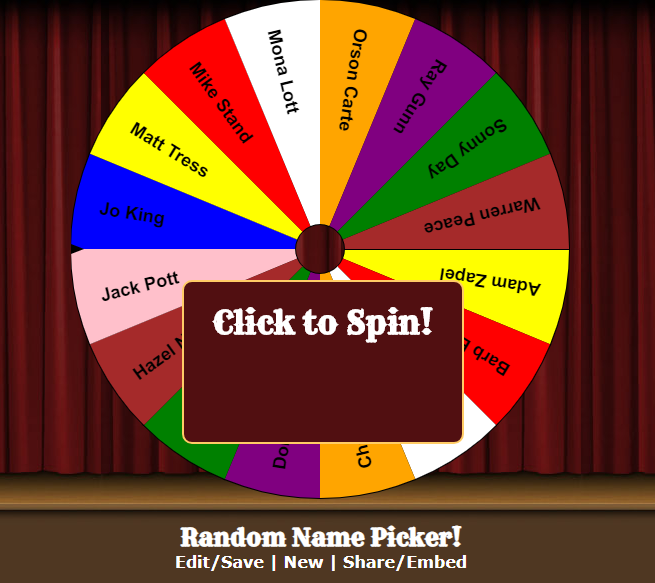
For authors and screenwriters, the random name generator is a lifeline when developing large casts of characters. Creating names that sound authentic to a specific time period, nationality, or fantasy setting is crucial for world-building, and manually maintaining a list of hundreds of unique appellations can be impractical. A specialized random name generator can be programmed to produce names that follow the phonetics and common structures of a particular culture—say, a list of traditional Irish surnames or futuristic-sounding given names for a sci-fi epic. This not only saves countless hours that would otherwise be spent searching through baby name books or historical records but also ensures a diversity of names that avoids the common pitfall of reusing similar names within a narrative.
Beyond the realm of fiction, the applications of a random name generator are deeply practical in the tech sector, particularly in software development and quality assurance. When developers need to test a new application’s database capabilities or user interface, they require a large volume of realistic, yet non-identifiable, dummy data. Using real names presents serious privacy and security risks, while manually typing in hundreds of placeholder entries is inefficient. A sophisticated random name generator solves this by quickly creating vast datasets of fictional user profiles, complete with generated first names, last names, and even related details like addresses or job titles. This capability ensures thorough testing under conditions that closely mimic real-world usage without compromising sensitive information.
The functionality of the random name generator is surprisingly diverse, offering customization options that go far beyond simple alphabetical shuffling. Many advanced versions allow users to specify gender distribution, select name origins, set the required length of the name, or even combine elements from two different lists to create truly hybrid names. For example, a user designing a fantasy world might want names that blend Latin roots with elvish suffixes. The generator’s algorithm processes these constraints, drawing from extensive internal databases and rulesets to deliver highly tailored results. This level of control means the tool isn’t just generating randomness; it’s generating calculated creativity based on the user’s explicit needs.
In the competitive world of entrepreneurship and marketing, the random name generator serves as a crucial starting point for brand and product naming. A memorable, catchy, and legally available name is a significant asset. However, with millions of existing businesses, finding a unique name that is easy to pronounce and has an available domain name can be extremely difficult. The generator can be tuned to produce neologisms—completely new, invented words—or to pair abstract nouns and adjectives in unique ways, often leading to suggestions that a human brainstorming session might overlook. These tools help quickly sift through thousands of possibilities, allowing the marketing team to focus their efforts on trademark and domain availability checks for a smaller, curated list of the best ideas.
The cultural shift toward using a random name generator is also evident in the gaming community, especially in massive multiplayer online role-playing games (MMORPGs) where the best names are often taken. Players face the challenge of finding an available name on a crowded server. A specialized generator built into the game or accessed externally can instantly provide a list of unused, unique names that still feel appropriate for the game’s setting. This ensures that new players can jump into the action immediately without the frustration of repeated rejections. Similarly, game masters running tabletop RPGs use these tools to populate towns and taverns with memorable non-player characters (NPCs) at a moment’s notice.
However, it is important to understand the inherent limitations of any random name generator. While the tool excels at producing a high volume of names, it often lacks the human touch of contextual meaning or emotional resonance. The generated names might be unique but may occasionally be unpronounceable, unintentionally humorous, or simply inappropriate for the intended purpose. The generator is a powerful assistant, not a final decision-maker. The best practice is to use the tool to create a long shortlist of possibilities, which a human then reviews, pronounces aloud, checks for hidden meanings, and ultimately selects the one that feels right. The technology provides the raw material; the user provides the final, intuitive judgment.
Ultimately, the rise of the random name generator reflects a broader trend of utilizing computational power to accelerate and enhance creative processes. It acts as a continuous inspiration engine, breaking through writer’s block and streamlining tasks that were once tedious and repetitive. From populating databases with dummy records to giving life to a protagonist or naming the next big startup, this unassuming digital tool has proven its value across various domains. By transforming the arduous task of name-finding into a swift and engaging process, the generator empowers users to dedicate their most precious resource—their creative energy—to the more complex and meaningful aspects of their projects.